What everyone at home should know in an emergency
In an emergency, the person who knows where the water valve is is often not the one at home. Here is what to write down so that anyone — a partner, a teenager, a babysitter — can act in seconds, and how to keep it up to date.
Why it belongs in one place
Most homes run on what one or two people remember. That works until the day they are away — and that is exactly when something breaks. Writing it down once, where everyone can find it, costs half an hour and saves the worst ten minutes of a bad day.
What to write down
Numbers. Your local emergency number — 112 across the EU and in the UK (where 999 works too), 911 in the US — plus your family doctor, the children's doctor and your insurance hotline with the policy number.
People. A plumber and an electrician you trust, the landlord or building manager, and a neighbour who has a spare key.
Places. Where the main water valve, the fuse box, the gas shut-off and the first-aid kit are.
Codes. The alarm, the intercom, the Wi-Fi for guests and the babysitter.
First steps. A few lines for each likely problem: a leak — close the main valve; a power cut — check the fuse box; a smell of gas — don't touch any switch or flame, open the windows, leave, and call the emergency number from outside.
Keep it current
Look at it twice a year — when the clocks change is an easy reminder — and whenever something changes: a new plumber, a new alarm code, a move. An out-of-date number is worse than none, because you only find out when you need it.
Keeping it in Sync & Shop
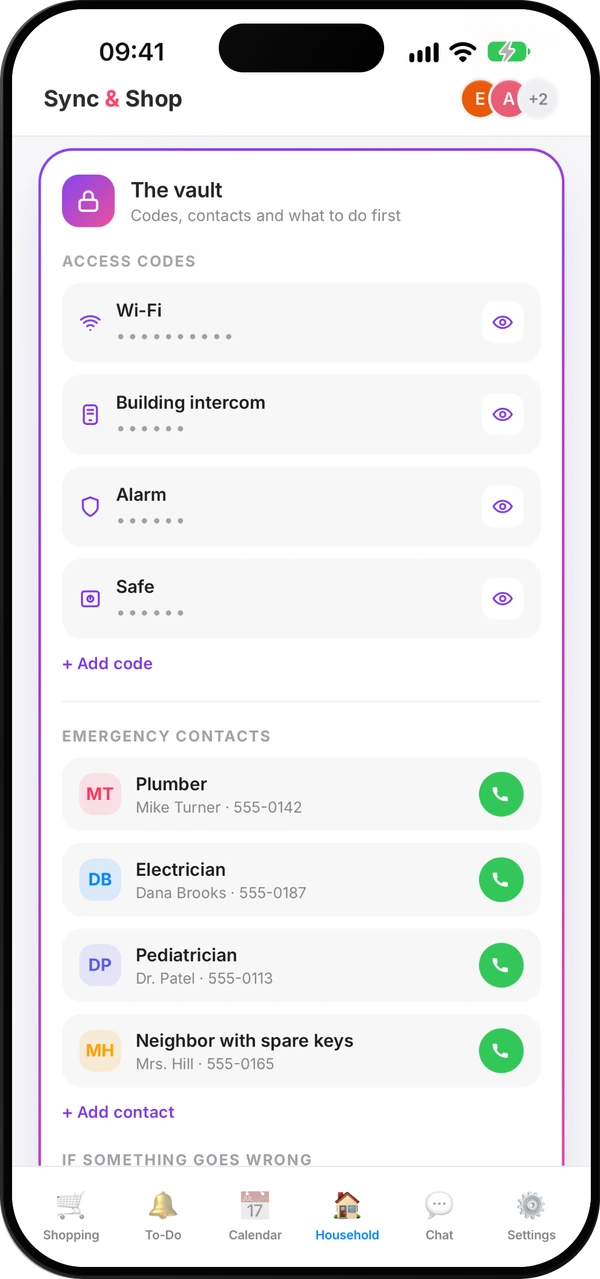
In Household, The vault has three parts: Access codes, added with + Add code; Emergency contacts, added with + Add contact and called with one tap; and If something goes wrong, for the first steps. Everyone in the group sees the same vault, so it is there for whoever is home.
Codes stay hidden until someone taps to reveal them, and on a phone with Face ID, Touch ID or a fingerprint set up, the app asks to confirm it's you first. Be clear about what the vault is not: it isn't end-to-end encrypted and it isn't a password manager, so keep bank PINs and passwords out of it.
The vault is part of Household, which is free for a group's first 60 days and then needs PRO. Nothing is deleted when the trial ends.
Questions people ask
Which emergency number should we write down?
112 works across the EU and in the UK, where 999 works too; in the US it is 911. Add your doctor and insurer as well.
Is the vault in Sync & Shop encrypted?
Codes are hidden until tapped and, where set up, protected by Face ID or a fingerprint on your own phone. The contents are not end-to-end encrypted, so don't store bank PINs or passwords there.
Who can see what's in the vault?
Everyone in the group. That is the point: whoever is home can find it.
Do we still need a paper copy?
Yes. A phone can be dead or locked in an emergency; one printed page is a good backup.
Is the vault free?
It is part of Household, free for a group's first 60 days and then with PRO. Nothing is deleted when the trial ends.
What everyone needs, where everyone can find it
Free, for the whole family.
Read next
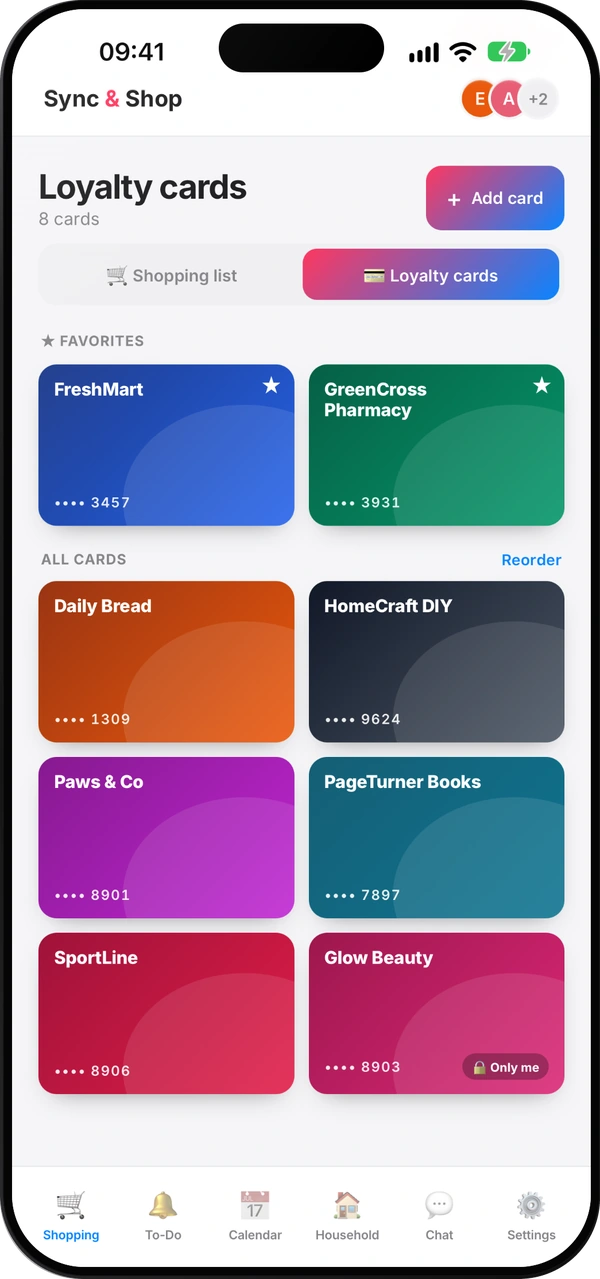
How to share loyalty cards with your family
Why the family's cards belong on everyone's phone, which to keep private, and how to set it up in minutes.
Does Stocard still work? No — here's where to move your loyalty cards
What happened to Stocard, the options you have now, and why it helps when the whole family uses the same cards.
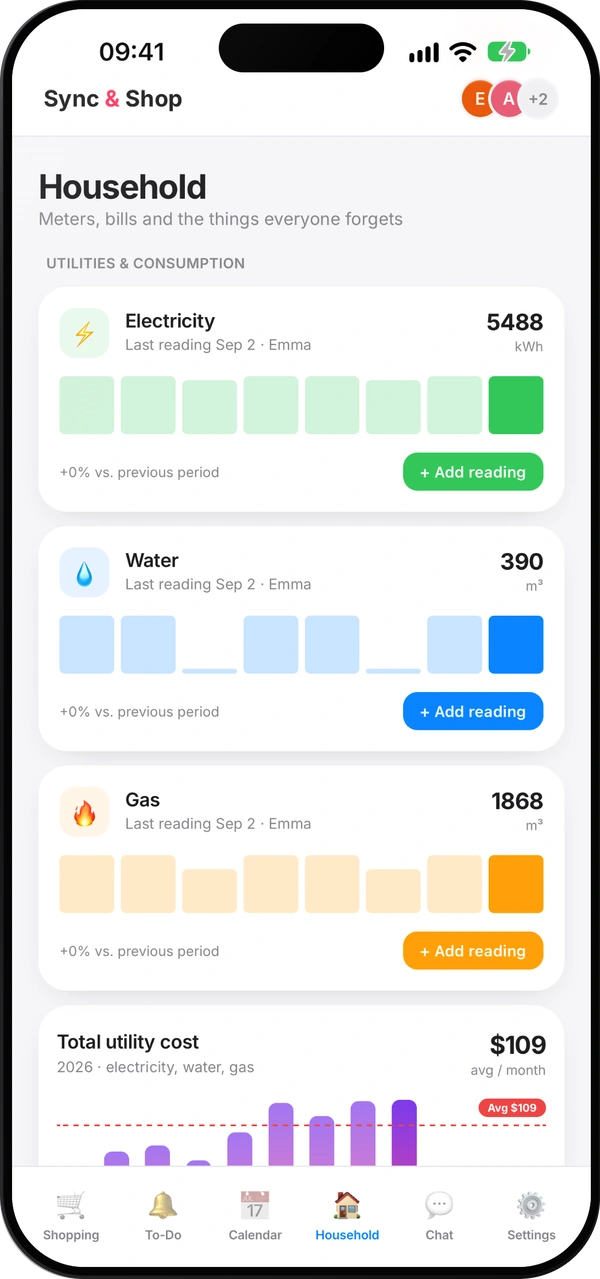
How to read your water, gas and electricity meters
Which digits to write down, how to spot a leak, and a monthly routine that keeps your bills honest.
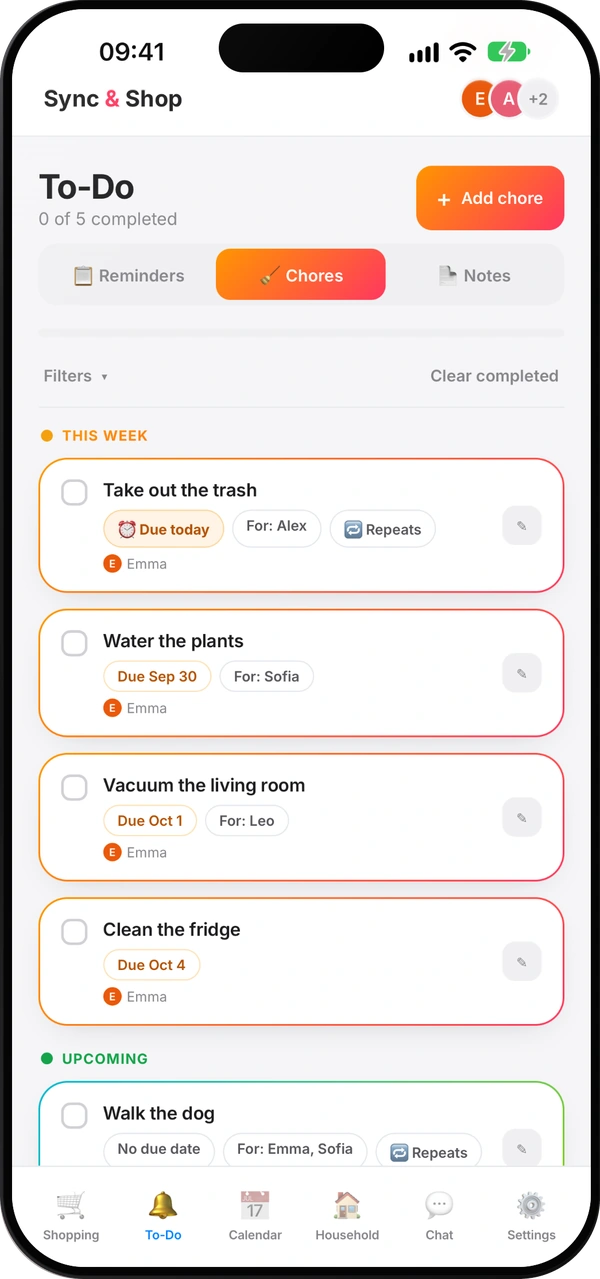
How to split household chores fairly
A simple method so nobody carries everything in their head — and nobody has to remind anyone ten times.
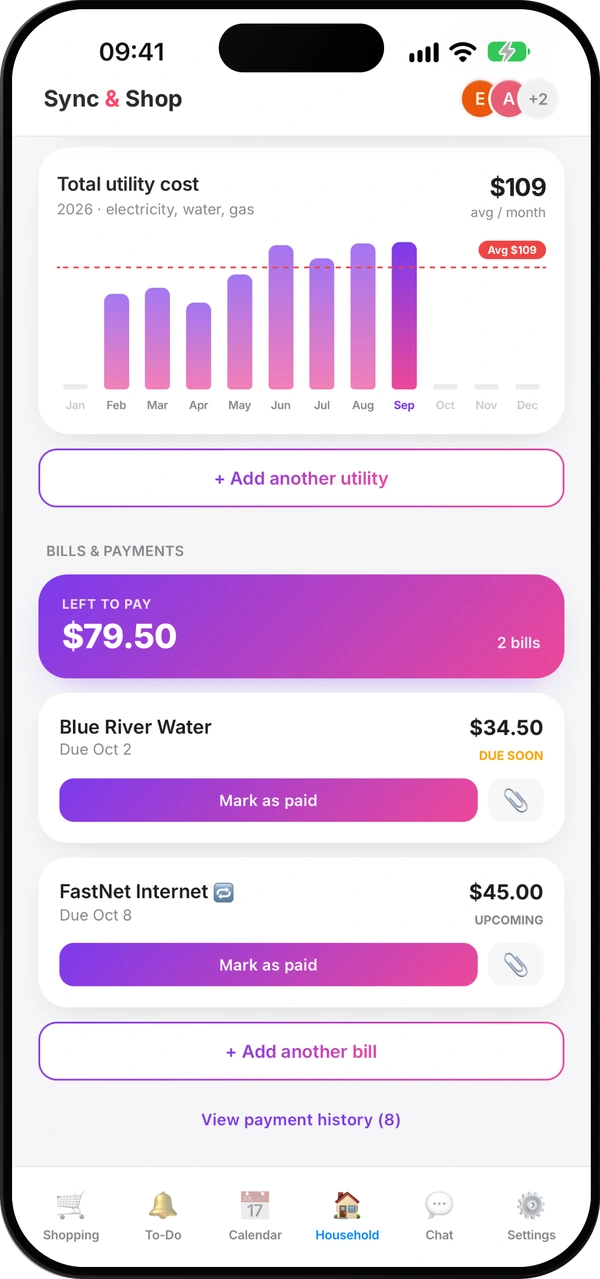
How to split costs with roommates without arguments
Agree early, pick a fair split, use a shared pot for small things and settle up on a fixed day.
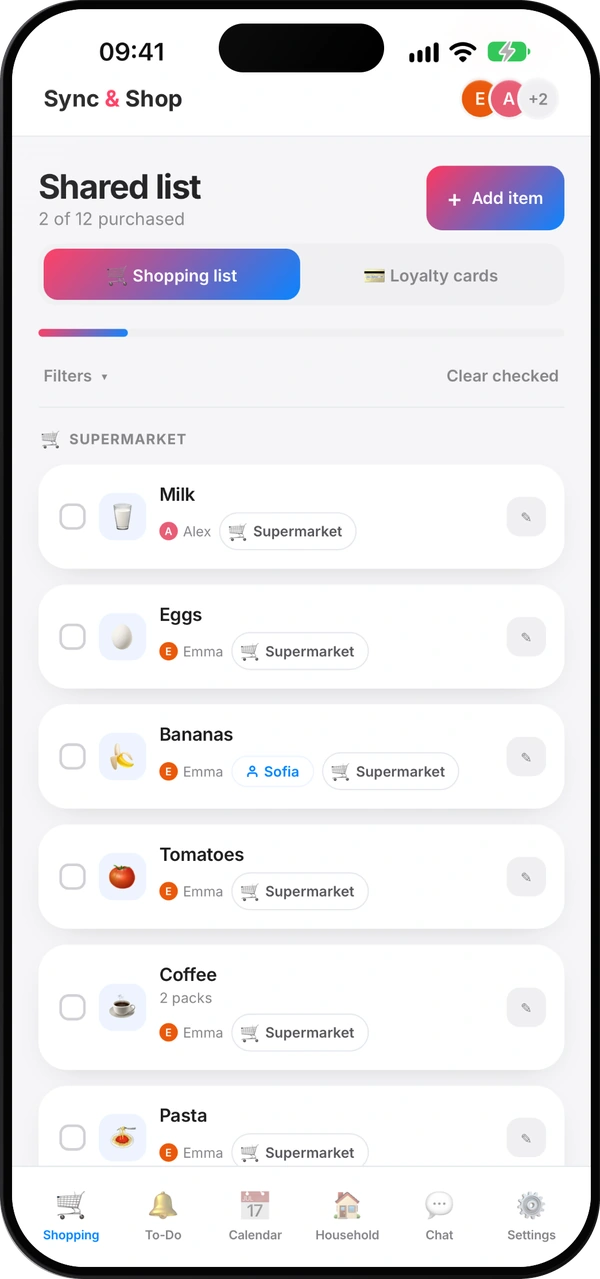
How to make a shopping list that saves you money
Check what you have, plan a few meals, sort by shop and keep one list for the whole household.
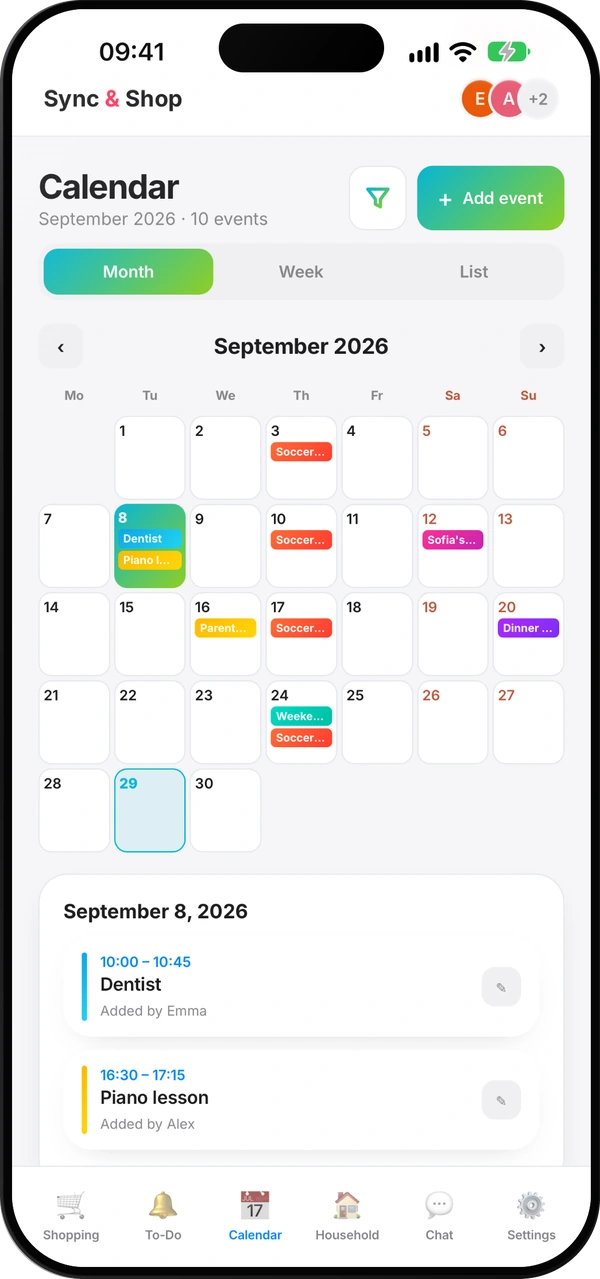
A family calendar that everyone actually uses
One shared calendar instead of five, what goes in it, and a ten-minute look ahead each week.