How to read your water, gas and electricity meters
A meter reading takes a minute, but getting it wrong — or skipping it — can mean paying an estimate for months. Here is what to write down on each kind of meter, how to spot a leak, and a simple routine that makes the numbers useful.
Why your own readings matter
When a supplier doesn't get an actual reading, many bill an estimate instead. An estimate can be too high — or too low, and then followed by a large catch-up bill once the real reading comes in.
Your own readings do two more things: they show you how this month compares with the last one, and they are the fastest way to notice that something is wrong, like a leak or an appliance using more than it should.
The water meter
Most water meters show the reading in cubic metres (m³). The black digits are whole cubic metres; the red digits, or the ones after the comma, are litres. For a bill, the black digits are the ones that count; the red ones help if you want to follow your use more closely.
In many flats there are separate meters for hot and cold water. Read and note each one on its own.
The gas meter
A gas meter measures volume, also in cubic metres. Note the digits before the comma — often black on a mechanical meter, with the decimals in red or after a comma.
Many suppliers bill gas in kilowatt-hours (kWh), not in cubic metres. The bill converts one into the other with a conversion factor printed on it, so don't compare the number on the meter directly with the number on the bill.
The electricity meter
Electricity is measured in kilowatt-hours (kWh). On a digital meter the display often cycles through several screens: wait for the one showing kWh, or press the button that switches between them.
If you have a day and night tariff, the meter keeps two separate readings — often marked T1 and T2. Note both. A smart meter may send its readings to the supplier by itself, but reading it yourself still lets you follow your use and check the bill.
How often, and when
Once a month, on roughly the same day, is enough for most homes. It makes each month comparable with the next and gives you a reading ready for whenever the supplier asks for one — many ask for readings around the billing date, when you move, or when you switch supplier.
Take a photo of each meter with your phone at the same time. If a number is ever disputed, the photo settles it.
Keeping it together in Sync & Shop
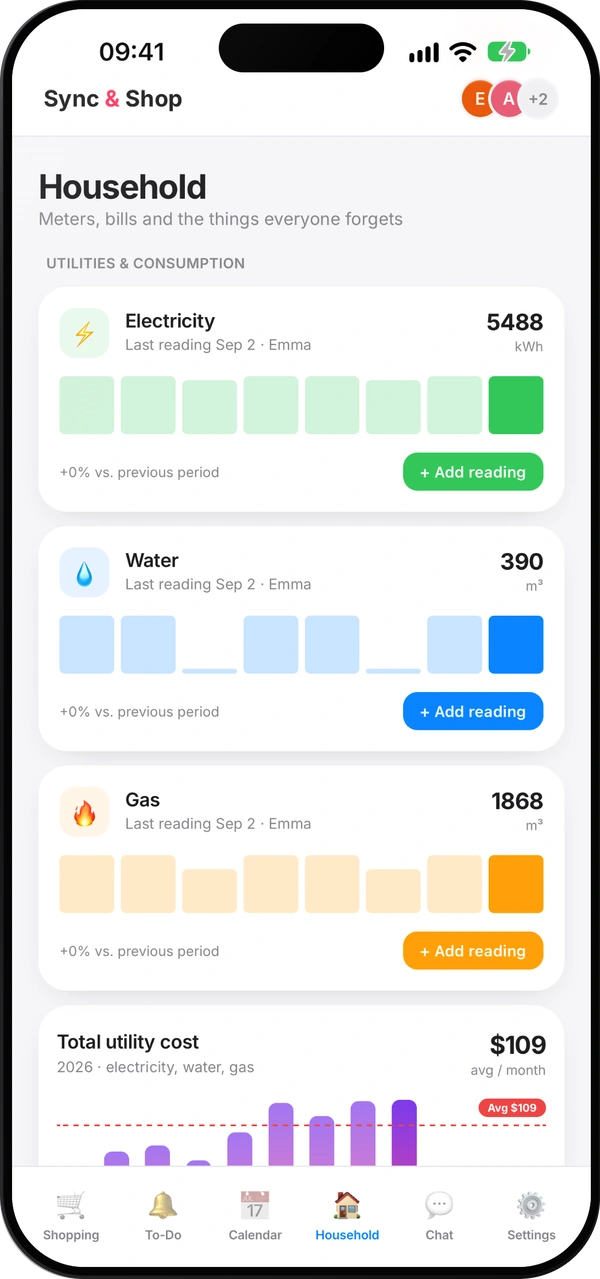
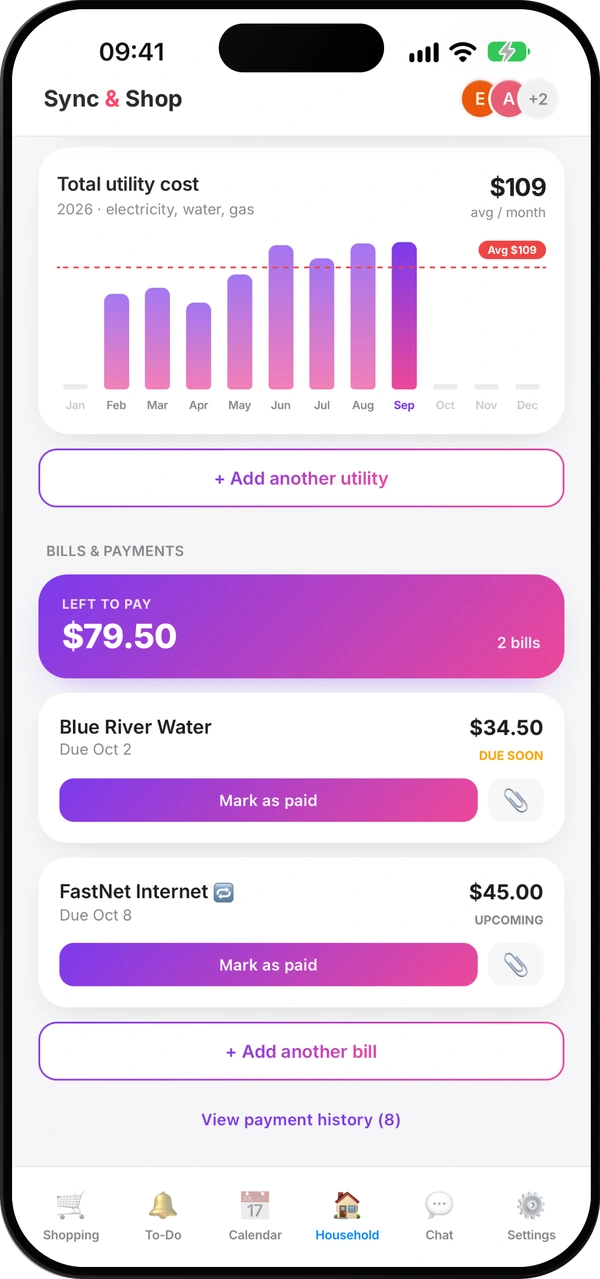
In Household, under Utilities & consumption, each utility has its own card — water, gas and electricity, and anything else with + Add another utility. Tap + Add reading and the app shows the use since the last reading, a chart month by month, and how it compares with the previous period.
Everyone in the group can add a reading, so whoever is home that day can do it. Bills sit in the same place: add one with its due date, attach a photo or PDF of the receipt, and Mark as paid when it's done. Set a cost alert and the app tells you when a month runs unusually high.
The Household section is free for a group's first 60 days; after that it needs PRO. Nothing is deleted when the trial ends — the section is simply locked until the group subscribes.
Questions people ask
Which digits do I write down on a water meter?
The black digits, which are whole cubic metres. The red digits, or those after the comma, are litres — useful for tracking, but not needed for the bill.
Why is my gas bill in kWh when the meter shows m³?
Many suppliers bill gas by the energy it contains. The bill converts cubic metres into kilowatt-hours with a conversion factor, which is printed on the bill.
How often should I read my meters?
Once a month, on about the same day, is enough for most homes. Read more often if you are looking for a leak.
Do I still need to read a smart meter?
It may send readings to the supplier by itself. Reading it yourself still lets you follow your use and check that the bill matches.
Is the Household section free in Sync & Shop?
It is free for a group's first 60 days, then it needs PRO. Nothing is deleted when the trial ends.
Every reading and every bill, in one place
Free, for the whole family.
Read next
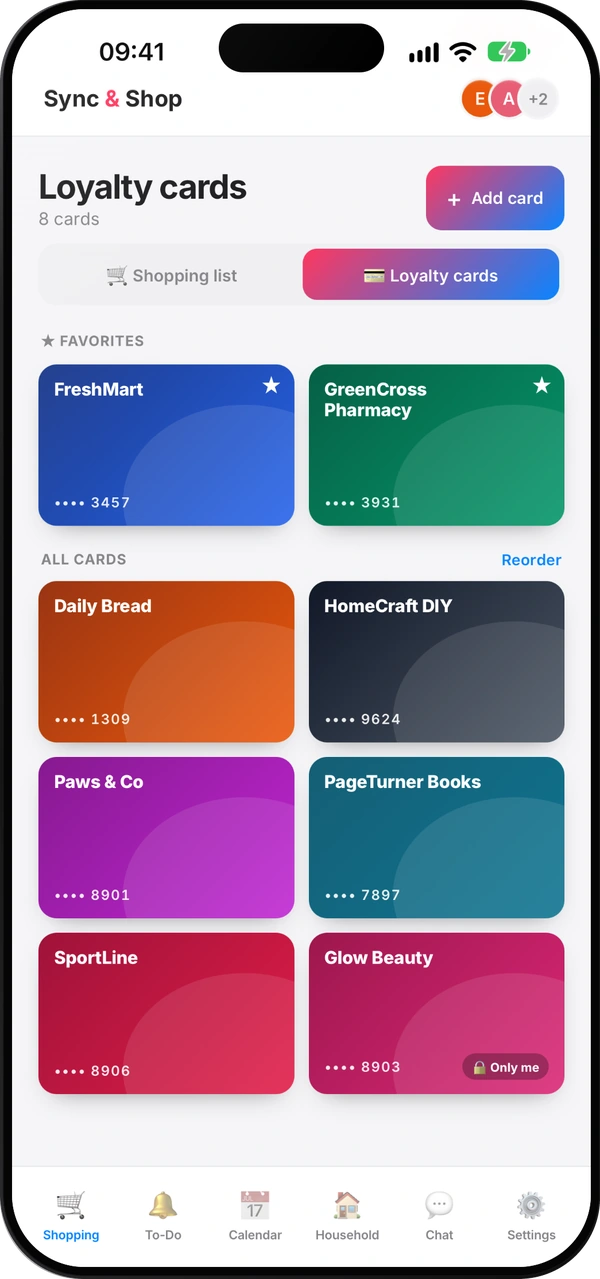
How to share loyalty cards with your family
Why the family's cards belong on everyone's phone, which to keep private, and how to set it up in minutes.
Does Stocard still work? No — here's where to move your loyalty cards
What happened to Stocard, the options you have now, and why it helps when the whole family uses the same cards.
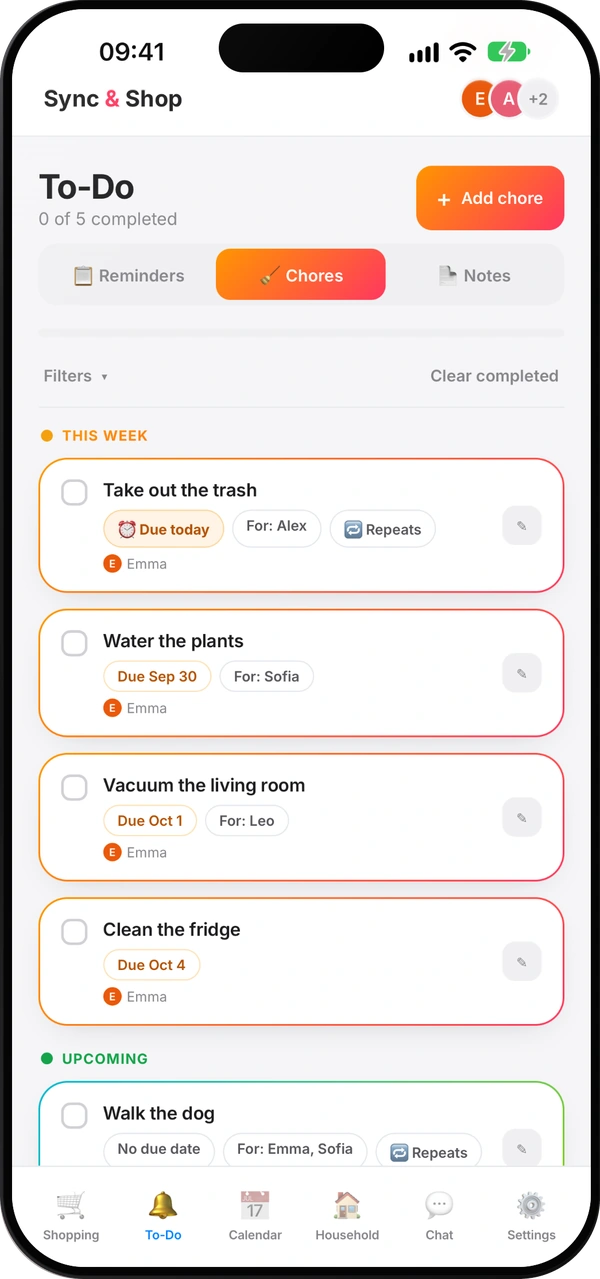
How to split household chores fairly
A simple method so nobody carries everything in their head — and nobody has to remind anyone ten times.
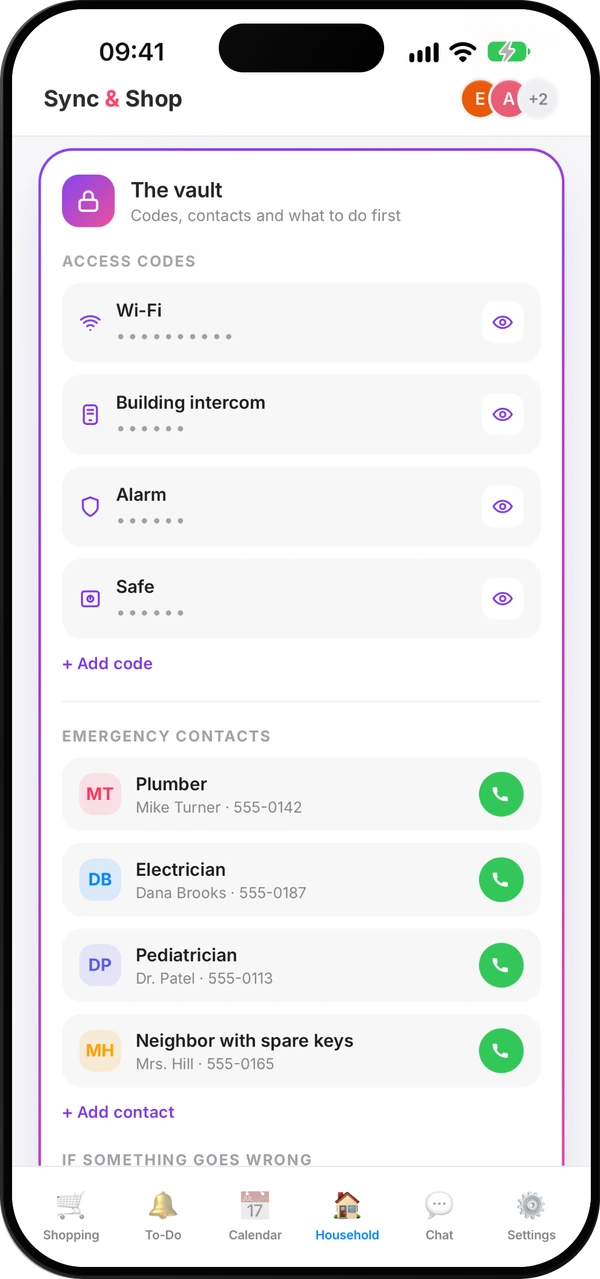
What everyone at home should know in an emergency
The numbers, contacts and first steps everyone at home should find in seconds — and how to keep them current.
How to split costs with roommates without arguments
Agree early, pick a fair split, use a shared pot for small things and settle up on a fixed day.
How to make a shopping list that saves you money
Check what you have, plan a few meals, sort by shop and keep one list for the whole household.
A family calendar that everyone actually uses
One shared calendar instead of five, what goes in it, and a ten-minute look ahead each week.